One Page Per Phase: The New Moon Sketchbook That Asks Nothing of You
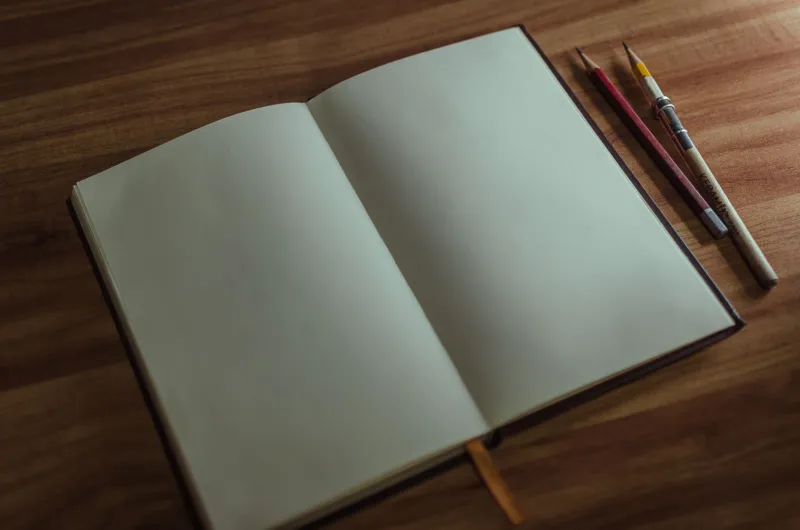
I started my first moon sketchbook on a new moon in a kitchen in Ohio, using a cheap spiral notebook and a pen I stole from a hotel. I could not draw. I want to say that plainly, because the internet is full of sketchbook tours that make the practice look like a portfolio review. Mine looked like a grocery list with feelings.
That was the point. The new moon is a good time to begin something badly. There is no light to expose your mistakes. You are not performing for anyone. You are just making a mark and letting the month move around it.
A Sketchbook With No Finish Line
The practice is simple: one page per moon phase. New moon, waxing crescent, first quarter, waxing gibbous, full moon, waning gibbous, last quarter, waning crescent. Eight pages a month, more or less. No grid, no color theory, no pressure to post.
You can use a single page for each phase or let one spread hold the whole cycle. You can write, doodle, paste a receipt, trace a leaf, or draw the same mug eight times. The only rule is that the page belongs to the phase, not to your inner critic.
A Short History of Moon Journals
Moon journals are not a wellness invention. Lunar calendars go back thousands of years, and medieval almanacs often paired moon phases with farming, weather, and feast days. In the nineteenth century, naturalists kept dated journals that tracked seasons, tides, and light. The moon showed up because it was part of the sky they were already watching.
Visual artists have long used cyclical journals too, even when they did not call them that. A painter might make a small daily study. A printmaker might record the same view in different weather. The lunar sketchbook sits in that lineage: not a masterpiece machine, just a dated record of attention.
The Practice: One Page, One Phase
Here is how I do it now, years after that first kitchen notebook. On the new moon, I write three words for what I want to notice. On the waxing crescent, I make a tiny drawing of something I saw that day. The first quarter is for a list. The waxing gibbous is for a color or texture I want to remember. The full moon gets the biggest page, because it is the most obvious. The waning phases are for editing, erasing, or leaving things alone.
None of this is sacred. The phases are just containers. If you miss a week, you miss a week. The moon will come back. That is the entire convenience of the practice.
Prompts for Each Phase
For the new moon, try: What am I beginning badly on purpose? For the waxing crescent: What is one small thing I can see from where I sit? For the first quarter: What decision am I halfway through? For the waxing gibbous: What is almost ready but not quite? For the full moon: What is obvious now that was not obvious two weeks ago? For the waning gibbous: What can I share? For the last quarter: What can I let go of without ceremony? For the waning crescent: What is the quietest thing I noticed this month?
You do not have to answer any of them. A prompt is a door, not a homework assignment.
What to Do When You Miss a Moon
Nothing. Really. The point of a lunar practice is not streak maintenance. Productivity culture has already taught us to turn hobbies into habits and habits into metrics. A moon sketchbook is a place to stop doing that.
If you miss a full moon, draw a cloud. If you miss a whole month, start on the next new moon. If you hate a page, turn it into a collage. The notebook is not a record of your consistency. It is a record of your life as it actually happened, which is usually messier and more interesting than a perfect grid.
The Point Is Not the Drawing
The point is to have somewhere to put the month. A place where a Tuesday can be a Tuesday, not a content opportunity. A place where you can be bad at something and still keep going. A place where the moon does the scheduling and you just show up.
I still cannot draw. But I have a shelf of notebooks now, and each one is a small, dated proof that I was paying attention. That is more than enough.