The Moon Is the Only Alarm: A Month Inside an Unplugged Artist Residency
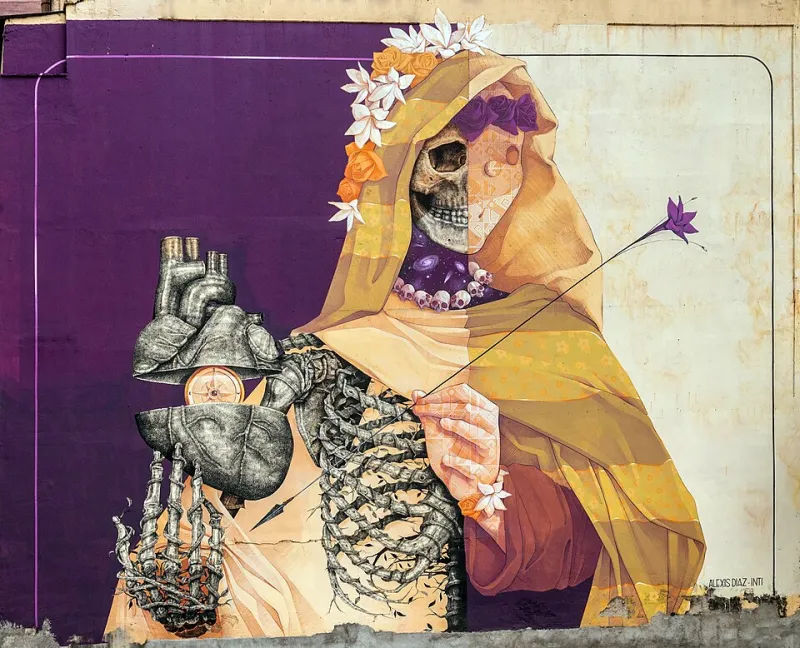
Photo: Wilfredor, CC BY-SA 4.0, via Wikimedia Commons
The first thing you notice at Cedar Basin is what is missing. There are no bars on your phone, no password taped to the fridge, no cheerful ping from a group chat. There is a dirt road, a cluster of adobe cabins, a shared kitchen with a hand-cranked coffee grinder, and a sky so wide it feels like a stage set. The second thing you notice is the moon. Or rather, the absence of it.
Cedar Basin is a small arts residency outside Taos, New Mexico, and its sessions run by the lunar calendar. Six artists arrive on the new moon, when the night sky is at its darkest. They stay for one full lunar cycle, roughly twenty-eight days, and leave after a full-moon open studio. During that month, the studios are unplugged. No internet, no streaming, no ambient screens. Cell service is a rumor. The daily rhythm is set by moonrise, which arrives a little later each evening, tugging the cohort through the month like a slow tide.
It sounds romantic. It is also occasionally boring, which may be the point.
Arrival on the Dark Side
The first two days are disorienting. Painters reach for their phones to check reference images and remember they cannot. A musician spends twenty minutes looking for a charger before realizing the outlet in her studio has been capped. A writer walks to the edge of the property at dusk, holding his phone above his head like a torch, and finds exactly nothing.
The residency calls this the dark side of arrival. There is no orientation slideshow. Instead, the director hands each artist a paper map, a candle, and a one-page schedule built around moonrise and sunset. Dinner is communal. The first night is silent. Everyone sleeps badly, then sleeps deeply.
By the third morning, the quiet starts to feel less like a punishment and more like a room. One painter sets up a still life of canned goods and a dented kettle. A musician records the sound of wind through a cracked window. The writer sharpens six pencils and writes one sentence. It is not a breakthrough. It is a start.
Moonrise as a Daily Clock
The schedule is not strict, but it is real. Moonrise moves. On the new moon, there is no moonrise at all, just a black sky and early darkness. As the month progresses, the moon appears earlier in the evening, then later, then later still. The residency posts a printed chart in the kitchen: moonrise, sunset, and a suggested quiet hour. Artists are not required to follow it, but most do.
What emerges is a different kind of productivity. Without a screen to tell them when to stop, people start noticing fatigue in their bodies. Without a calendar app, they mark time by the quality of light. The painters work in the morning and walk in the afternoon. The musician practices after dinner, when the studio cools down. The writers cluster around the wood stove and write longhand because the laptop batteries are saved for emergencies.
There is no heroic all-nighter culture here. The dark does not encourage it. When the sun drops behind the mesa, the temperature falls fast, and the cabins pull everyone inward. The residency does not ban work after dark, but it makes late-night grinding feel ridiculous. You can only stare at a candle for so long before you decide to go to bed.
The Messy Middle
The second week is when the experiment gets honest. The novelty wears off. The silence gets loud. One painter starts three canvases and hates all of them. A musician records six hours of drone and cannot tell if it is good or just long. A writer fills a notebook with complaints about the wind.
This is the part the residency does not advertise. A lunar month is long enough to get bored, and boredom is not always generative. Sometimes it is just boring. The director checks in but does not offer pep talks. The rule is simple: stay with the work, even when the work is bad. Especially when it is bad.
By the third week, something shifts. It is not a lightning bolt. It is more like a slow thaw. The painter stops trying to make a finished piece and starts making a series of small studies. The musician records the same phrase twenty times and finds a melody inside it. The writer writes a scene that has nothing to do with the project she came with, and it is the best thing she has made in a year.
The absence of Wi-Fi does not create genius. It creates a container. No one can scroll their way out of a bad afternoon. No one can compare their progress to a stranger's highlight reel. The only feedback loop is the work, the room, and the moon doing its slow thing overhead.
What Actually Changed
Not everyone loves it. One artist leaves a day early, citing a family emergency. Another admits she spent most of the month anxious about what she was missing online. A painter says the darkness made him sleepy, not inspired. The residency does not pretend these reactions are failures. It treats them as data.
But most of the cohort leaves with something they did not arrive with. For some, it is a body of work. For others, it is a clearer sense of what they actually need to make things: not a better app, but a longer stretch of unbroken time. A writer says she finally understands that her best ideas arrive when she is not trying to capture them. A musician says the month taught him how much of his creative process was actually just checking email.
The full-moon open studio is the culmination. Friends, neighbors, and a few local artists drive out for an evening of paintings, recordings, readings, and weak coffee. The moon rises over the mesa like a lamp someone remembered to switch on. The work is unfinished, uneven, and alive. No one claps too hard. No one livestreams it. It is enough.
How to Build Your Own Low-Tech Retreat
You do not need a residency in New Mexico to borrow the structure. The Cedar Basin model is surprisingly simple, and most of it can be adapted to a cabin, a borrowed apartment, or a long weekend at home.
Start with a lunar month, or the closest thing you can manage. A weekend is too short to get past the novelty, but ten to fourteen days can still shift a routine. Arrive on a new moon if you can. It gives the whole experiment a clear beginning and an ending you can see coming.
Make arrival a ritual. Turn off notifications. Put the phone in a drawer. If you need a map, print it. If you need a clock, use an analog one. The point is not to suffer. The point is to remove the frictionless escape routes that keep you from noticing your own attention.
Let light be the schedule. Work when the sun is up. Walk when you get stuck. Eat dinner before dark. Do not plan a late-night productivity sprint. The dark is not a challenge to overcome. It is a boundary that can make the day feel more finite and more valuable.
Plan a soft ending. The Cedar Basin artists do not leave the morning after the open studio. They spend a day packing, sleeping, and writing a few notes about what they want to carry home. Reentry is part of the retreat. Otherwise the first hour back online can erase the whole month.
Finally, invite one person to witness the work. Not a crowd. Not a performance review. Just someone who will look at what you made and ask a real question. The full moon does not need an audience, but creative work often does. A small, honest room can be enough.
The Case for Leaving the Signal Behind
Cedar Basin is not a utopia. It is a small, scrappy residency with a specific idea about time. It will not fix a broken creative practice, and it is not accessible to everyone. Childcare, jobs, and health needs do not pause for the lunar cycle. But as a thought experiment, it is useful. The month asks a question most of us avoid: what would your work look like if you stopped checking the world every eleven minutes?
The answer is not always pretty. It is often slow. Sometimes it is just a person in a cold studio, staring at a half-finished canvas while the moon does its quiet, indifferent thing. But that might be the most honest creative retreat there is: no signal, no shortcut, no alarm except the one rising over the mesa.