The Waning-Moon Table: A Last-Quarter Supper With No Recipe and No Rush
I started cooking by the moon for a deeply unglamorous reason: I was tired of throwing away half a bunch of parsley. The crisper drawer had become a graveyard of good intentions. The last quarter moon — that waning half-light that arrives roughly three weeks into the lunar cycle — gave me an excuse to deal with it. Not in a punitive, clean-out-the-fridge way. In a gather-people-and-make-something way. The last quarter is a release point. The moon is not building anymore. It is letting go. That felt like a useful rhythm for a kitchen.
A Cue, Not a Command
Here is what the last-quarter supper is not: a meal-prep system, a zero-waste challenge, or a productivity hack dressed in linen. It is not a schedule you put in your calendar with a color code. It is a recurring invitation to look at what you already have and turn it into dinner. The moon is just the reminder. The point is the table.
In practice, that means I pick the night closest to the last quarter — usually a Wednesday or Thursday, when the week has softened but the weekend has not arrived — and I text three or four people. Not a dinner party. A supper. The difference is mostly in the expectation. A dinner party has courses and a centerpiece. A supper has a pot, a loaf of bread, and whatever is in the pantry.
The Pantry Is the Menu
The last quarter is a clearing moon, so I treat the pantry as a prompt rather than a problem. I open the cupboard and look for the half-used bags: farro, lentils, a handful of dried chiles, the last of the walnuts. I check the fridge for the vegetables that are one day away from a second life. Then I make a meal that is less recipe than logic: something soft, something crunchy, something bright, something warm.
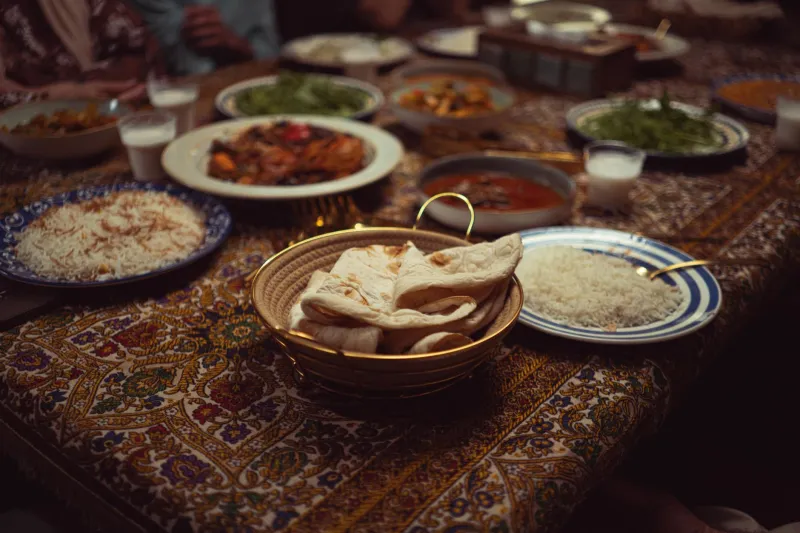
A typical last-quarter supper in my house looks like this. A pot of beans or lentils simmered with whatever onion and garlic are around. A sheet pan of root vegetables — carrots, sweet potatoes, maybe a tired squash — roasted until the edges go dark. A handful of herbs chopped into a rough sauce with olive oil and vinegar. Bread, if there is bread. Cheese, if there is cheese. It is not a meal you would photograph for a magazine, but it is the kind of food that makes people exhale when they sit down.
Set the Table for a Few, Not a Crowd
The magic number is four to six. Fewer than four and it feels like a meeting. More than six and you are hosting. The last-quarter supper is designed for the middle ground: enough people to make the table feel alive, few enough that you can actually talk to everyone. I use mismatched plates and cloth napkins that do not match either. I put out water and maybe one bottle of wine. I do not make a playlist. The kitchen sounds are the playlist.
There is also a practical benefit to keeping the guest list small: you can cook from what you have without a grocery run. The whole ritual falls apart if it becomes an excuse to buy a list of ingredients. The point is to use the parsley. The point is to finish the jar of olives. The point is to let the pantry dictate the menu, not the other way around.
No Clock, No Checklist
The meal itself has no schedule. People arrive when they arrive. I put out something to nibble on — olives, crackers, the last of the hummus — and I keep cooking. If the beans take longer than expected, fine. If the vegetables need another ten minutes, fine. The last quarter is not a night for precision. It is a night for paying attention to what is actually happening in the kitchen rather than what you planned.
This is the part that feels quietly radical in a culture that treats cooking as content and hosting as performance. You do not need a recipe. You do not need a theme. You do not need to document it. You need a pot, a little salt, and the willingness to let dinner be ordinary. The moon is waning. The week is long. The table is small. That is the whole idea.
Make It a Monthly Habit
The last-quarter supper works best as a recurring ritual. Once a month is enough. It gives you a rhythm that is not tied to the calendar on your phone — a rhythm that says: clear the shelves, check in with friends, make something simple, let the month go. It is a gentle counterpoint to the productivity culture that tells us every spare hour should be optimized. This is an hour that is not optimized. It is deliberately inefficient. It is a pot of beans and a conversation that goes nowhere in particular.
If you try it, start small. Pick the next last quarter. Text two people. Open the cupboard. See what happens. You do not need a special pan or a philosophy. You just need to decide that the waning moon is a good enough reason to make dinner.