Threadbare and Willing: The Waning-Moon Mending Circles Reclaiming Repair
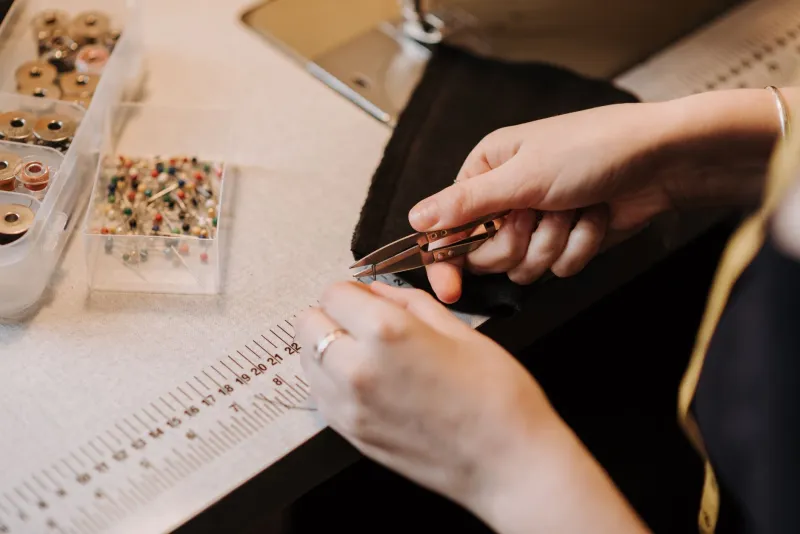
On a Tuesday night near the last quarter, the basement of a Minneapolis church smells like wool, coffee, and faintly of machine oil. Six people sit around a long table with a broken lamp, a pair of jeans with a blown knee, and a sweater that has been in a cedar chest since 2019. Nobody is in a hurry. A hand-lettered sign by the door reads: “The moon is waning. So is the pile. Stay till it’s done.”
This is a mending circle, one of a growing number of U.S. gatherings that meet by the lunar calendar rather than the corporate one. The waning phase—the stretch from full moon to new moon—has become a loose organizing principle for repair cafés, textile artists, and community organizers who want a monthly excuse to fix things together. The logic is not astrological. It is rhythmic. A waning moon suggests decrease, release, and making do with less. For people who are tired of replacing everything, that is a useful story to gather around.
The Quiet Work of the Last Quarter
At Mend & Fade, the Minneapolis circle, the first hour is silent. People bring their own projects and their own tools, though there is a communal basket of thread, patches, needles, and a battered sewing machine that belongs to the church. The second hour is for help. A retired tailor shows a college student how to reinforce a crotch seam. Someone else demonstrates a ladder stitch on a couch cushion. The last twenty minutes are for tea and the kind of conversation that only happens when hands are busy.
“I came because I wanted to learn how to fix my own clothes,” said Renee, a 34-year-old nurse who has attended for eight months. “I stayed because it is the only place I go where nobody asks me what I do for a living.”
The waning-moon framing is flexible. Some circles meet on the last quarter. Others gather on the waning crescent, closer to the dark. A few treat the whole two-week stretch as a window and let members choose a night. The common thread is repetition: once a month, same table, same intention. That predictability matters more than perfect astronomy. A repair café in Burlington, Vermont, calls its series “The Diminishing Returns” and keeps a paper ledger of every item fixed, every item deferred, and every item that finally went to the recycling center with a proper goodbye.
Repair as Release
Not everything can be saved, and the circles do not pretend otherwise. A Tucson group, Repair Commons, has a ritual for the things that are beyond fixing: a five-minute “release table” where an object can be photographed, thanked, and dismantled for parts. It sounds sentimental until you watch it. People bring single gloves, dead headphones, cracked mugs, and clothes worn to transparency. The release table gives them a way to let go without pretending the object never mattered.
That is the part that separates lunar mending from a standard repair café. The waning phase is not only about fixing. It is about discernment—deciding what is worth another season and what has become clutter. In a culture that treats repair as a niche hobby and replacement as the default, that kind of attention is quietly radical. It is also practical. A patched jacket costs less than a new one. A rewired lamp keeps a piece of furniture out of the landfill. A mended sweater carries a story that a new one cannot.
A Starter Framework for a Lunar Repair Night
You do not need a storefront or a nonprofit to host one. You need a table, a few tools, and a willingness to let the evening be slow. Here is a simple framework for 2026.
1. Pick your phase. Choose the last quarter or the waning crescent. Set a recurring date—for example, the Thursday nearest the last quarter—and keep it for three months before deciding whether to continue.
2. Keep the guest list small. Six to twelve people is enough for a first gathering. Ask each person to bring one item to repair and one tool they know how to use. A shared kit of needles, thread, glue, screwdrivers, and a power strip covers most basic fixes.
3. Separate skill from supervision. Have one table for quiet work and one for questions. If someone has a skill—sewing, electronics, bike repair—invite them to hold a “station” for twenty minutes rather than teach a full class.
4. Make room for release. Include a small box or tray for items that cannot be fixed. Let people say what the object was and why they are letting it go. No pressure, no ceremony required.
5. End with a closing circle. Five minutes. Each person says one thing they repaired and one thing they are leaving alone. Then turn off the lights and go home.
The moon will wane again next month. The pile will still be there. But so will the table, the thread, and the people who have decided that some things are worth keeping.