Lunar-Only: The Photographers Who Shoot Just One Night a Month
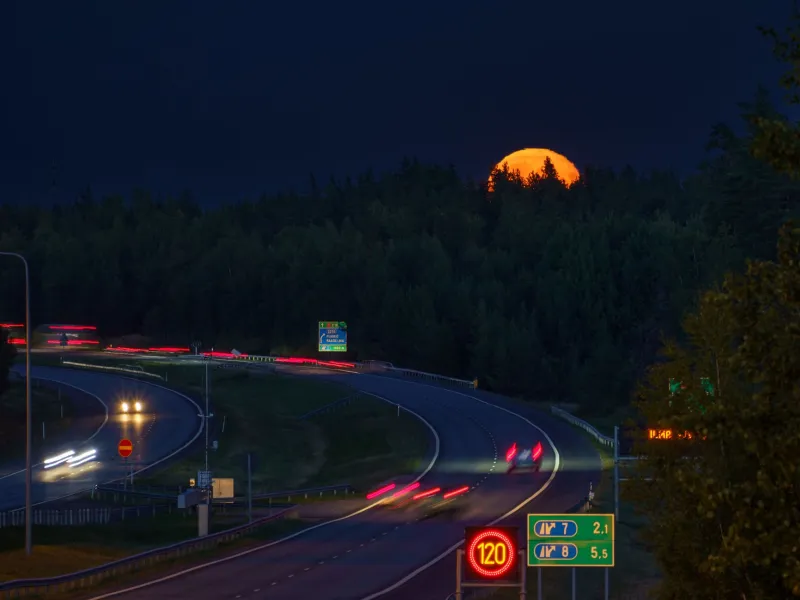
At 9:40 on a clear night in the Mojave, a dozen people stand in a loose arc, tripods planted in the sand like fence posts. No one is talking. A red headlamp blinks on, then off. Somewhere beyond the creosote, the moon is about to clear the ridge, and when it does, the whole scene will change from black to silver. This is not a photo walk. It is a lunar-only shoot, and everyone here has waited a month for it.
The Rule That Makes the Picture
Lunar-only photography is exactly what it sounds like: images made under the full moon, without flash, without fill, without streetlights or headlights doing the heavy lifting. The constraint is the point. Across the U.S., the practice is small but stubborn—a scattered network of photographers in Arizona, Vermont, coastal Maine, and the high desert of New Mexico who plan their months around the moon’s calendar and shoot only when it is full, or nearly so.
That rule sounds romantic until you try it. A full moon is bright by night standards, but it is still roughly 400,000 times dimmer than the sun. To make an image, photographers lean on long exposures: eight seconds, fifteen, sometimes thirty. They scout locations in daylight, return after dark, and wait for the moon to rise above the tree line or the mesa. Cloud cover can cancel a shoot that took weeks to arrange. So can wind, wildfire smoke, or a forgotten tripod plate. The moon does not negotiate.
What Lunar Light Actually Does
Moonlight is reflected sunlight, but it does not behave like a smaller version of the sun. Long exposures accumulate light in ways the eye cannot, turning a dark field into a soft gray plane and pulling texture out of sand, bark, snow, and stone. Shadows are directional but gentle. Colors go quiet. A red barn becomes a dark shape with a silver roof; a lake becomes a mirror with a little more mystery in it.
Photographers talk about exposing for the moon and letting the rest of the frame fall where it may. They shoot at f/2.8 or f/4, push ISO to 400 or 800, and accept a certain amount of noise as part of the deal. They focus manually, because autofocus often gives up in the dark. They bracket exposures and check the histogram with a red-filtered flashlight. None of this is glamorous. All of it is slow.
The Group Wait
The social side of lunar-only shooting is quieter than a typical photo meetup. In Tucson, a photographer sends a group text when the forecast looks clean. In Vermont, a crew meets at a trailhead with thermoses and a shared document of locations. On the Maine coast, a handful of shooters coordinate around tide charts and moonrise, because a full moon over water is one thing at 6 p.m. and another at 11.
Etiquette is simple: red headlamps only, no white light, no flash, no shouting across the field while someone is mid-exposure. People share scouting notes and lend tripods. Someone always brings too much coffee. The gathering is social, but the work is solitary. You stand in the dark, listen to the wind, and wait for the light to do its thing.
A Different Kind of Seeing
What lunar-only images reveal is not just a landscape. It is a different way of paying attention. Familiar places go strange. A parking lot becomes a stage. A cornfield becomes an ocean. A suburban cul-de-sac looks like a film set after the crew has gone home. The photographs are often soft, grainy, and imperfect—and that is part of their appeal. They do not pretend the night is day.
There is also a calendar lesson built into the practice. The full moon returns every 29.5 days. You cannot cram it into a busy week or reschedule it for convenience. You either show up or you wait. That rhythm appeals to photographers who are tired of the always-on pace of digital image-making. One monthly shoot becomes a reset, a reason to drive out of town, a night when the phone stays in the pocket.
How to Try It Without Chasing Perfection
You do not need a remote desert or a fancy lens to start. A backyard, a local park, or a quiet stretch of beach will do. Scout by daylight so you know where you are going after dark. Bring a tripod you actually like carrying. Learn manual focus. Expose for the brightest part of the scene and let the shadows go dark. Check moonrise time, not just sunset. Tell someone where you are. Dress warmer than you think you need to.
The next full moon falls on November 24, and the one after that on December 24. That gives you a month to plan, or two nights to decide. Either way, the moon will be there. The photographers who keep showing up learn something rarer than a clean exposure: how to wait without fidgeting. It is the kind of slow art Nine Moons keeps an eye on—work shaped by a calendar older than the camera, made in the hours when most of us have already gone inside.