Stitched Sky, Painted Moon: How American Folk Art Kept Time by Hand
Folk art rarely announces itself as astronomy. It shows up as a crescent sewn into a quilt corner, a tin moon nailed above a barn door, a hand-lettered sign promising Moonlight Cabins in flaking white paint. In the margins of American handmade life, the moon has been less a subject than a coworker: a clock, a weather report, a small bright companion for people up before dawn or still awake long after supper.
That is the thing curators keep returning to when they talk about lunar motifs in American folk art. The moon in these objects is not ornamental in the way a landscape painting might be. It is practical. It is emotional. And it is almost always local—tied to a particular porch, field, kitchen table, or stretch of highway.
The Almanac in the Quilt
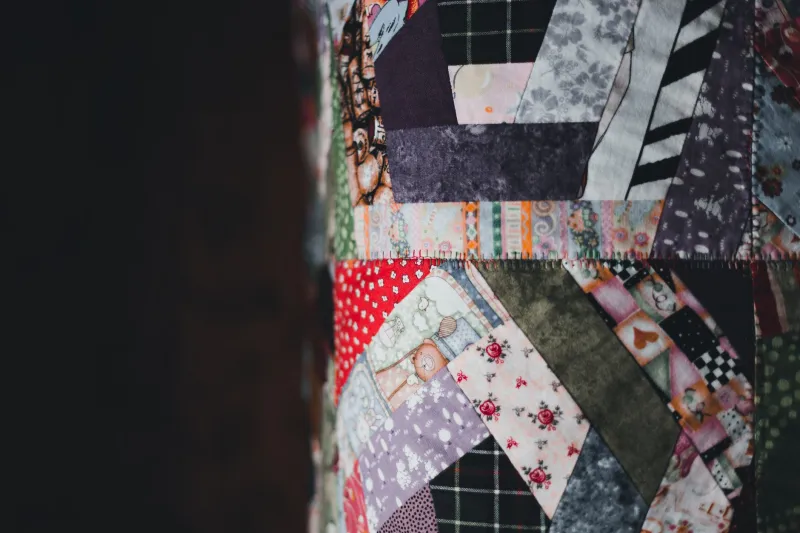
Quilts are where the sky gets most intimate. A full moon stitched in indigo calico can read as a calendar square, a memorial, or simply a beautiful shape repeated until it becomes a rhythm. In nineteenth-century album quilts and friendship quilts, makers often tucked stars, suns, and crescents into blocks alongside hearts, hands, and initials. These were not illustrations from an astronomy textbook. They were shorthand for change: planting and harvest, courtship and separation, birth and grief.
Curators at collections such as the American Folk Art Museum in New York, the Shelburne Museum in Vermont, and the Abby Aldrich Rockefeller Folk Art Museum in Virginia point out that moon motifs tend to travel in packs. Where there is a moon, there is often a star field, a rising sun, a hand pointing upward. The sky becomes a borderland between the everyday and the cosmic. A quiltmaker working by lamplight did not need to name a phase to know its meaning. She could sew a crescent and let the family reader supply the rest.
What makes these quilts feel so contemporary is their pace. You cannot rush a quilt. You cannot rush the moon, either. Both ask for return visits. In that sense, a moon-phase quilt is a slow-living object before slow living had a name: a record of nights spent piecing cloth, a way of marking time without trying to master it.
Weathervanes, Signs, and the Moon as Neighbor
Move outside the house and the moon gets more functional. Weathervanes topped with crescents or pierced with star shapes turn the wind into a small public drama. Hand-painted signs for motels, cabins, and dance halls use moons to promise atmosphere—cool night air, a lit window, a place to stop. Roadside shrines in the Southwest and elsewhere sometimes gather the moon and stars into vigil landscapes, where handmade metal, flowers, and paint turn grief into a visible night sky.
These objects are not naive attempts at science. They are local knowledge. A farmer reading the moon for frost or a traveler reading a sign for shelter is doing the same thing folk artists have always done: making the sky useful. The moon becomes a neighbor rather than a distant orb. It tells you when to cover the tomatoes, when to start the drive home, when to leave a light on.
That practicality is also why the moon shows up in so many hand-painted signs. A crescent can do a lot of work in a small space. It suggests night, romance, rest, and a little bit of mystery—all without a single sentence. Folk artists understood that economy. They painted for people moving through weather and time, not for gallery walls.
What Curators See When They Read the Sky
When curators display these objects today, the temptation is to treat the moon as pure charm. The better readings are messier. A moon on a quilt might be a mourning motif. A moon on a weathervane might be a maker's signature. A moon on a roadside shrine might be a way of keeping someone company in the dark. The same shape carries different weight depending on the cloth, the tin, the paint, and the place.
That is what makes regional folk-art collections worth visiting slowly. You start noticing repetitions: crescents with faces, full moons with rays, stars arranged like scattered grain. You start seeing how often the moon appears at the edge of an object rather than the center. It is a margin dweller. It lives where daily life meets the unknown.
For readers of Nine Moons, this is the slow-looking part of the lunar cycle. You do not need a telescope to study the moon in American folk art. You need a bench, a docent with patience, and the willingness to look at a quilt square for longer than feels reasonable. The moon in the margins rewards that kind of attention. It has been waiting there all along, keeping time by hand.