The Slow Browse After Sundown: A Night at the Full-Moon Market
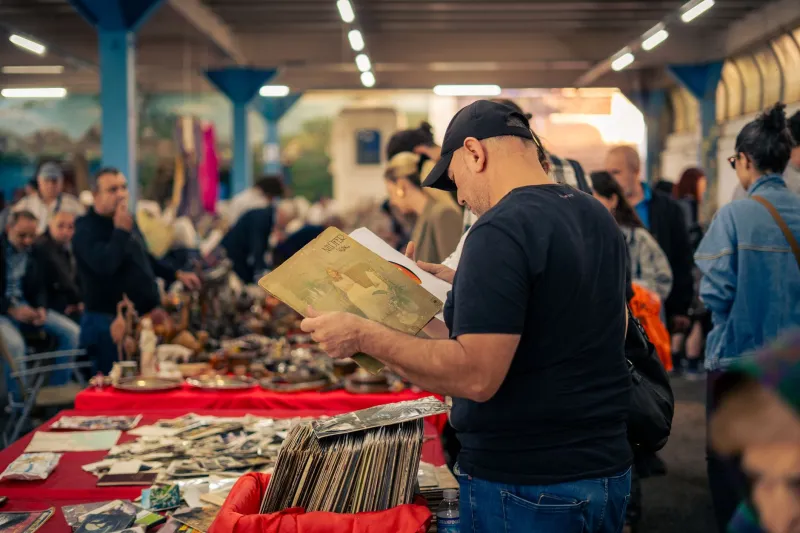
The folding tables go up before the sky has made up its mind. It’s late afternoon on a full-moon weekend, and a paved lot behind a former textile mill is filling with the soft clatter of ceramic mugs, the thump of record crates, and the rustle of zine pages being weighted against the breeze. Vendors arrive with carts and milk crates and hastily printed signs. A woman in a canvas apron unwraps a box of hand-thrown bowls and lines them up by size. A vinyl dealer tests a small speaker with a 1970s soul record. Somewhere near the entrance, someone is untangling a string of warm bulbs that will soon be the only thing standing between shoppers and total darkness.
This is the full-moon flea, a loose constellation of after-dark markets that have popped up around the country in recent seasons. They are not Renaissance fairs or craft fairs in the traditional sense, though you’ll find crafts. They are not nightclubs, though the music is good. Think of them as temporary neighborhoods: ceramicists, zine makers, vintage clothing sellers, and record dealers setting up shop under the moon, open late enough that browsing becomes its own evening plan.
Setup Hour: Tables, Tarps, and Good Lighting
The market’s organizer, a former gallery assistant named Lena Ortiz, says the lunar timing started as a practical joke. “We wanted an excuse to stay outside later,” she says, taping a hand-lettered sign to a post. “Then we realized people were actually waiting for the moon. They’d show up at dusk and stay for hours.”
Ortiz now runs a monthly market on full-moon weekends from spring through fall. Vendors pay a modest table fee. There is no Wi-Fi password, no QR-code-only checkout mandate, and no official app. What there is, she says, is a different pace. “Daytime fleas can feel like a race. People come with a list and leave in twenty minutes. Here, they walk around. They talk. They come back to the same table three times.”
That rhythm is visible in the setup. Vendors arrange their wares for discovery rather than quick scanning: bowls stacked slightly askew, records filed by mood instead of alphabetical order, zines fanned out like a hand of cards. A ceramicist named Marcus Lee says he brings fewer pieces to night markets on purpose. “I used to pack everything,” he says, setting out a row of speckled mugs. “Now I bring the stuff I want to talk about. The moon crowd asks questions. They want to know what glaze does in different light.”
Moonrise: The Crowd Changes
By the time the moon clears the roof of the old mill, the lot has filled in. There are couples sharing paper cones of fries, a group of friends comparing thrifted jackets, and a few people who appear to have come alone and are in no hurry to leave. The lighting does something to the merchandise. Glaze catches the string bulbs. Vinyl sleeves look deeper and more saturated. Zines become small illuminated windows.
Does lunar timing actually change the crowd? Vendors say yes, though not in the way you might expect. It isn’t that people are mystically calmer. It’s that the full moon gives them permission to be out late without a specific destination. “On a normal Saturday, people are on their way somewhere else,” says record dealer Priya Natarajan. “Here, this is the somewhere else. They stay. They flip through the whole crate. They ask what I’ve been listening to.”
Natarajan says she sells fewer records per hour at night markets than at daytime fairs, but she sells more to people who actually want them. “They’re not buying because they feel rushed or because they saw something on their phone. They’re buying because they found it while standing here.”
That sense of discovery is part of the appeal. The market has no featured-vendor algorithm, no sponsored placements, no feed. If you want to find the zine maker with the hand-bound travel essays, you have to walk past the candle seller and the vintage denim rack and the table of ceramic spoons. You have to look. And looking, it turns out, takes time.
The Case for Browsing Slowly
There’s a useful argument buried in all this: slow browsing after dark is its own form of arts programming. A gallery opening asks you to look at work for an hour and then go home. A concert asks you to listen in a fixed seat. A night market asks you to wander, touch, ask questions, and maybe buy a mug because you like the way it feels in your hand. It is low-stakes arts engagement, which is often the kind that sticks.
Ortiz says she has watched people who “would never go to a craft fair” spend an hour talking to a zine maker about printing methods. She has seen kids pick up records because the covers look like comic books. “It’s not a museum,” she says. “Nobody’s shushing anybody. But people are paying attention.”
That attention is the whole point. The full moon is a hook, a calendar marker, a reason to gather. The real draw is the pace: the chance to browse without a cart, a countdown, or a recommendation engine nudging you toward the next thing. Under string lights, with the moon rising over the lot, the market becomes a small, temporary argument for taking your time.
By ten o’clock, the crowd has thinned. Vendors are wrapping bowls in newspaper and stacking crates. The string lights buzz softly. Someone is still flipping through the last record box, holding a sleeve up to the light. The moon is high now, bright enough to cast shadows across the pavement. The market will close soon. But for a few more minutes, there is nowhere else to be.