What the Window Knows: Bookstores Relearning the Art of the Slow Display
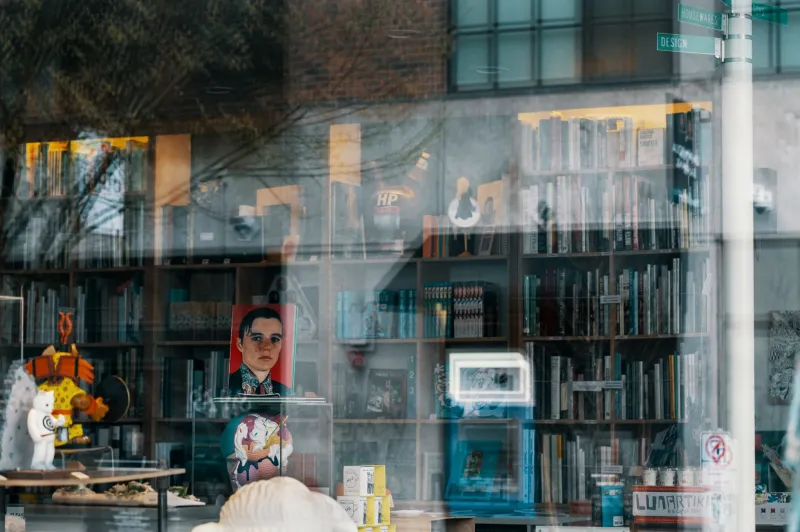
On a damp evening in Portland, Oregon, a bookstore window has gone dark on purpose. The lights are low, the display sparse: one crime novel face-out, a folded city map, and a small handwritten card that says, “For the new moon: begin in the dark.” No bestseller stack. No blinking sign. Just a shelf with its voice turned down.
A few blocks away, another shop has gone the other direction. Its window is all silver paper and open poetry collections, arranged like a table set for company. The bookseller calls it the full-moon window. It stays up for three nights, then comes down.
This is not a new kind of retail theater, exactly. It is closer to a calendar made of paper and glass. In shops from Asheville to Minneapolis, Providence to Tucson, booksellers are arranging their windows and reading tables around the moon’s phases—new-moon mysteries, full-moon poetry, waning-moon manuals for repair and mending. The practice is small, local, and stubbornly unoptimized. Which may be exactly why readers are starting to plan their browsing around it.
A Display That Keeps Time
Most storefronts are built to shout. The window is a billboard, the table is a funnel, the whole thing is designed to move a customer toward the register. Lunar curation works differently. It gives the shop a rhythm that has nothing to do with release dates or quarterly goals.
“I needed a reason to change the window that wasn’t just, ‘What’s new this week?’” says a bookseller at a small shop in Asheville, North Carolina. “The moon gave me one. It is predictable and a little mysterious at the same time. Customers notice.”
That predictability matters. A lunar display is not random. It follows a public schedule, roughly twenty-nine and a half days, and it asks for a different mood at each turn. The new moon favors beginnings and dark covers—mysteries, quiet memoirs, books about starting over. The waxing phase leans toward momentum: adventure, essays, anything with a forward lean. The full moon is for abundance: poetry, big novels, art books, maybe a little romance. And the waning moon, that underrated stretch after the peak, is for repair manuals, gardening guides, mending, decluttering, grief, and the kind of reading that helps a person put something back together.
New Moon, New Shelf
The new-moon window is the hardest to sell and the easiest to love. There is no big reveal, no spotlight. One shop in Providence keeps a single lamp on and stacks three books on a bare wooden table. The card changes each month, but the message is always some version of: start here.
Readers have begun to treat it like a scavenger hunt. A customer who came in for a birthday gift learns that the new-moon table is where the staff puts books they cannot quite categorize. The next month, she comes back to see what landed there. That is not a transaction. It is a relationship with a place.
This is the quiet genius of the lunar window: it gives people a reason to return that is not tied to a new title or a discount. The shop becomes seasonal in a way that chain stores rarely are. You do not need to buy something every time. You just need to look.
Full-Moon Poetry and the Browser Who Stays
Full moon is the extrovert of the cycle. Shops lean into it. In Minneapolis, one bookseller sets out poetry, large-format art books, and a few novels with covers that catch the light. The table is generous and a little unruly, like a dinner party where everyone talks at once. Customers linger. They pick up books they would not normally open.
That lingering is the point. Slow living is not about doing everything slowly. It is about giving attention a place to land. A full-moon table says: stay a minute. Read a poem standing up. Let the browsing be the activity.
Several booksellers mentioned that the full-moon display brings in people who do not usually shop by genre. They come for the mood. A poetry skeptic picks up a slim collection because it is next to a book about the night sky. A reader who only buys thrillers leaves with an essay collection about walking. The window does the work of a good conversation partner: it makes an unexpected suggestion and then gets out of the way.
The Waning Stack
If full moon is the party, waning moon is the Sunday after. This is where shops put the practical books—home repair, mending, herbal guides, budgeting, books about rest and boundaries. It can sound dreary. In practice, it is one of the most intimate displays in the store.
A bookseller in Tucson describes the waning table as “the shelf for people who are actually doing something.” Not aspirational cooking, but the cookbook you use on a Tuesday. Not a fantasy of a tidy house, but a real guide to fixing a screen door. The moon is getting smaller; the reading gets more grounded.
Customers notice that too. One reader said she plans her monthly bookstore visit around the waning phase because that is when she wants practical books, not dreamy ones. Another waits for the full moon to buy gifts. The calendar is not enforced. It is simply there, like a good host who knows when to dim the lights.
A Small Ritual, Not a Gimmick
The risk, of course, is that lunar curation becomes a theme night. A chalkboard moon. A special cocktail. A hashtag. Some shops may lean that way, and that is fine. The practice works best when it stays a little plain: a window, a table, a card, a bookseller with a point of view.
What makes it stick is the constraint. There are only eight phases, give or take, and only so many ways to arrange a table. The constraint forces choice. It keeps the display from becoming a catch-all. And it gives customers a way to remember the shop—not as a place that always has everything, but as a place that keeps time.
Here at Nine Moons, we tend to look for the moon in culture, not just the sky. This is one of those cases where the two are doing the same work. A bookstore window that changes with the phases is a small act of hospitality. It says the world has rhythms beyond the feed. It says a shelf can be a calendar. It says come back next month; the light will be different.
That is not a marketing strategy. It is a way of living with books. And in 2026, with everything moving faster than anyone asked for, a window that waits for the moon feels less like nostalgia and more like good sense.